What you have watched happen
“The plan is sound. They will not sign it.”
“Three meetings in, and we are no closer.”
“The structural work is finished. The family is the one still holding.”
“Conflict avoidance isn’t neutrality.”
— WealthManagement.com, 2025
The documents are signed, the ownership transfer is mapped, the structural work is done. The family still will not move.
The plan structured the transfer. It didn’t complete the transition. You watch the same conversation circle a third time, the senior generation defer, the successor stop pressing, and the meeting end on something that is not a decision. The shoulders never drop. The founder cannot name a date. The successor has stopped asking for one. None of what is happening is in the file you built.
The engagement drifts past the timeline you planned. The work you carried waits. The relationship cools, and the call you expected from the family does not come.
When families were asked what stalls succession, they named resistance to change, credibility concerns, and family dynamics. Three answers. One root.
The greatest risk to a family enterprise lives in the room where no one says the thing that needs to be said.
The stall looks different through each role at the table. The root is the same.
What I do
The stall is not in your work. In the largest study of family wealth transfers, six in ten failures traced to one cause: breakdown of trust and communication within the family.1 Not the structure. Not the plan. The family. And that layer was never the one your work was built to carry. When a transition comes apart this way, you lose more than the engagement. You lose the relationship you spent years building, and you carry the one that fell apart long after the work is done.
That layer is mine. I work alongside you, never in front of you, on the family dynamics that decide whether the structure holds. The unspoken expectations, the identity bound up in letting go, the patterns the family has run on for decades. When that part is met, the work you built stops waiting on a shelf. The family moves, and the transition you designed finally closes.
The founder is not a problem to be managed out. They carry decades of values, decision-making logic, and leadership philosophy that exists nowhere else in the room. When that inheritance is honored and captured, the founder finds the path forward, and the successor inherits something no document can transfer.
Cleared relationships create alignment. Governance documents formalize it.
63% of family enterprise leaders are not fully confident the next generation is ready.
Resistance to change (34%) and successor credibility (33%) outrank every operational challenge, and both are family dynamics by another name.
External CEO adoption is doubling, from 13% to 26%, as families lose confidence in internal succession.
Deloitte Private, 2026. 1,587 family enterprises surveyed.2
Where the work begins
The Succession Dynamics Assessment™. A structured three-to-four-week diagnostic that maps where the family dynamics are putting the succession at risk, before it becomes a crisis. It opens with a short joint call, the founder and the successor generation together, to set how the work runs and confirm what stays private. Then individual sessions, one with the founder and one with each participating member of the successor generation. A written Succession Dynamics Map™. A sixty-minute debrief, where each participant receives their own copy.
From there, the work continues in the shape the family needs.
How we work together
Your client stays your client.
Nothing in how I work changes who they belong to. The relationship you have built with this family stays in your hands.The introduction is yours to make.
I do not pursue your clients directly. You make the warm introduction when you decide the timing is right, and the work is mine to carry from there.The work I do is the family dynamics, never the structure.
No legal, financial, or governance advice. Everything that touches the architecture stays with you.Thirty minutes to begin.
The first conversation runs thirty minutes. No cost, no commitment, and nothing required from your client beyond saying yes to the call.What is said in the room stays in the room.
Nothing comes back to you unless the family asks me to bring you in. That boundary holds on both sides.The Succession Dynamics Diagnostic™. Eight questions about what you are observing in a client family’s succession. Two minutes, and the pattern becomes visible.
About
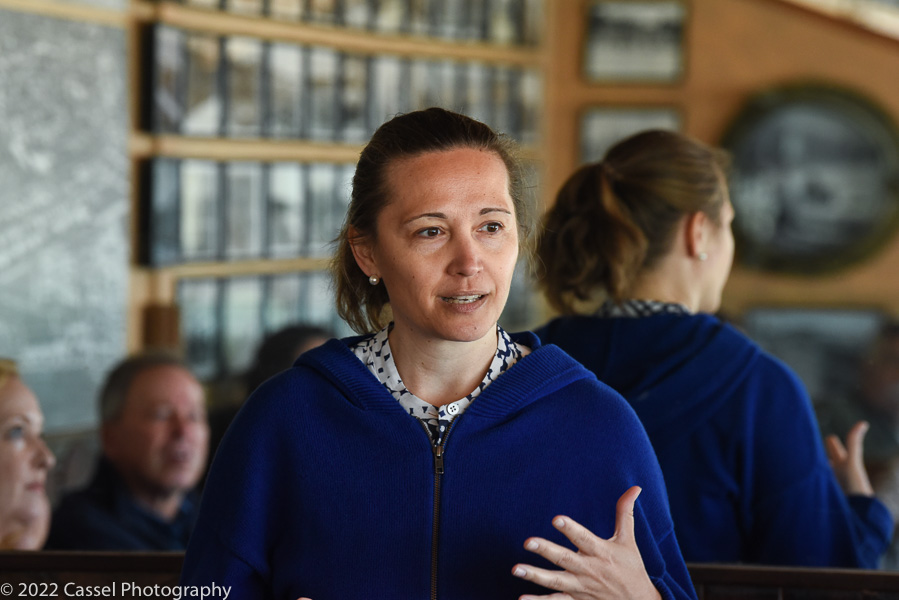
My first job was assistant to a division manager in corporate Switzerland. I sat in the room while he and his department heads talked, and I noticed what was moving between them before anyone named it.
From there into quality management, then business excellence. Years auditing sister divisions, writing the report, following the fix through. The first thing you learn is that you only audit what you are shown.
A technical audit finds the defect in the process. The one underneath finds how the people around it are meeting each other, and that one almost never got opened. Budget pressure, polite assessments, nobody wanting to wake a sleeping dog.
Family enterprise succession carries the same gap at higher stakes. Your team handles the architecture. I handle the foundation it sits on. I surface what a family has left unspoken and lay it in front of them, so what has been shaping your plan is visible before it decides the outcome.
I am building this practice now, and the families who come in early are priced accordingly. Where I am, not where this work will be in two years.
Credentials
Certified Auditor, SQS Switzerland · Business Excellence Coach, EFQM · Master Certified Health Coach, ACE · Member, Purposeful Planning Institute · SuperHuman AI Certified
Speaking
Stephanie speaks to estate planning councils, wealth management groups, and professional associations on the family dynamics that sit underneath succession plans.
The Gap Between the Plan and the Family: What Deloitte’s 2026 Data Reveals About Succession Readiness
The Conversation Nobody Wants to Start: Raising Family Dynamics Without Overstepping
The Missing Seat at the Table: Adding Family Dynamics to the Advisory Team
All sessions 30–45 minutes. Written materials provided for MCLE credit.
A member of the Purposeful Planning Institute, Stephanie is based in Los Angeles and available for in-person and virtual speaking engagements.
When the family is what holds the transition back, your structural work is finished. What is left is the conversation the family has not been able to have. That is what I take on.
If you are watching it stall now, the next step is a thirty-minute conversation. The introduction is yours to make. Start the conversation. No template reply, no automated queue. A real exchange when the time is right.